Pull Cord Rope About
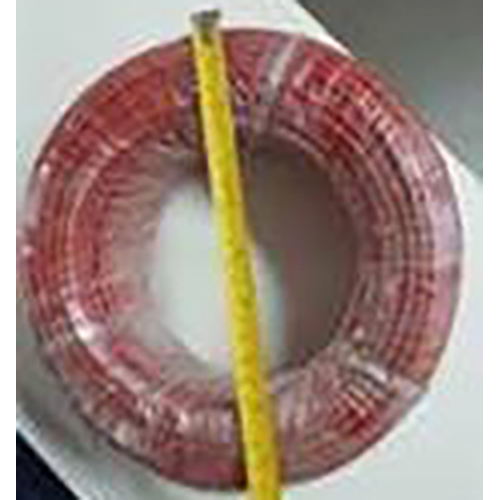
This rope or cable used with a pull cord safety switch to trigger an emergency stop along a machine or work area.
Applications --
- Conveyor belts (most common)
- Assembly lines
- Material handling systems
- Warehouses and mining operations
Uncompromised Safety Standards
Our Pull Cord Rope adheres to global safety certifications such as OSHA, IS, and CE, ensuring dependable emergency stop activation. With an IP65 rating (when installed with compatible switches), it is resilient against dust and water ingress-a crucial requirement for industrial environments. Easy to install along conveyor belts or other machinery, it provides heightened workplace safety and peace of mind.
Versatile and Robust Design
Available in custom or standard lengths up to 50 meters, our pull cord rope offers flexibility to accommodate varied conveyor configurations. The heat-resistant, braided nylon construction provides high tensile strength and resistance to abrasion, UV exposure, and corrosion, allowing for prolonged and repetitive use even in harsh conditions.
Efficient Emergency Response
Mechanical integration with emergency switches ensures immediate signal transmission at low pull force. The rope's simple manual activation and accessory compatibility (including clamps, tensioners, and guides) streamline both installation and operation, enabling rapid and effective emergency stops crucial for industrial safety.
FAQ's of Pull Cord Rope:
Q: How is the pull cord rope typically used in industrial settings?
A: The pull cord rope is predominantly installed along conveyor systems or critical industrial pathways, where it serves as an emergency stop mechanism. When manually pulled, the rope mechanically triggers associated emergency switches, transmitting a stop or alert signal to halt machinery and enhance worker safety.
Q: What process should be followed during installation?
A: Installation involves securing the rope along the desired path using compatible accessories such as clamps and guides. End fittings-hooks, clips, or loops-are attached as needed to interface with emergency switches. The rope must be coiled or spooled to prevent tangles and anchored firmly to maintain tension for reliable activation.
Q: When should the pull cord rope be checked or replaced?
A: Routine inspections should be conducted to monitor for signs of abrasion, UV damage, or end fitting wear. Although highly durable, the rope should be replaced immediately if its sheath or core shows significant deterioration or after any load near its maximum breaking strength has been applied.
Q: Where can the pull cord rope be installed for effective operation?
A: It is designed for surface and along-the-belt mounting on conveyor systems but can also be used wherever an emergency stop is required in industrial environments. Proper placement ensures accessibility for manual activation in the event of an emergency.
Q: What are the primary benefits of using this emergency pull cord rope?
A: The main benefits include superior tensile strength, high flexibility for repeated use, resistance to UV and corrosion, straightforward installation, and compliance with international safety standards. These features make it an ideal safety enhancement for industrial applications.
Q: What makes the pull cord rope suitable for repeated pulling and harsh environments?
A: The high-tenacity synthetic fiber core, combined with a braided and heat-resistant sheath, confers exceptional strength and durability. Its UV and abrasion resistance ensure reliable function even under frequent use and in challenging industrial conditions.






 Send Inquiry


 Send Inquiry
